Trip Grade
Moderate

Duration
10 Days

Daily Activity
4-6 hours

Country
Nepal

Season
Spring/autonm

Group Size
2-10 Pax

Max Altitude
5545 meters

Transportation
Private vehicle / Plane / helicopter

ACCOMMODATION
Tea Houses

Trip Type
Trekking
Experience the grandeur of the world's highest mountains without compromise — classic Sherpa heartland, sacred monasteries, and close-up Himalayan panoramas, designed for comfort and ease.
The Everest Comfort Trek is a thoughtfully curated journey through the legendary Khumbu region — the ancestral homeland of the Sherpa people. Unlike traditional high-altitude expeditions that demand weeks and physical extremes, this itinerary delivers the full magic of the Everest Himalaya in a relaxed, accessible format.
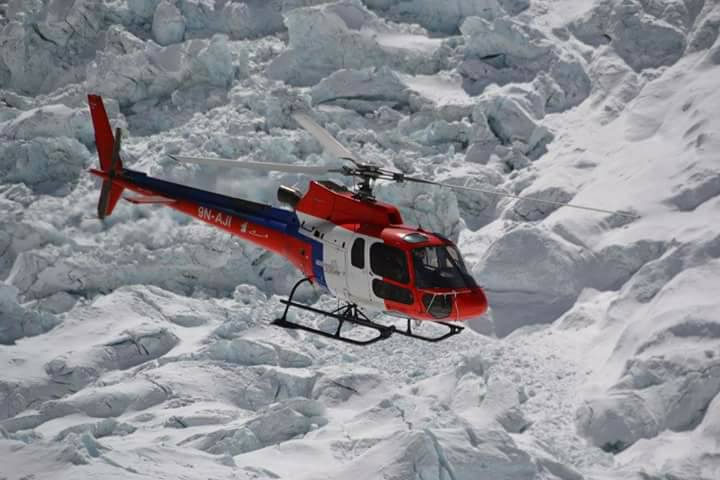
Trekkers walk the classical trail from Lukla through rhododendron forests and stone-paved villages to the stunning valley of Dingboche, visiting the iconic Tengboche Monastery and marvelling at close-up views of the world's greatest peaks. A thrilling helicopter shuttle then carries you directly to Everest Base Camp at 5,364 m — and back — so you experience this iconic milestone without the rigours of the full alpine ascent.
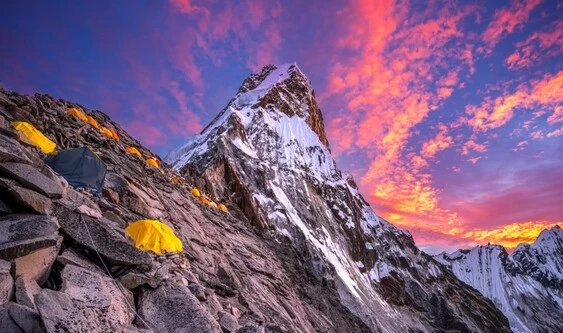
Step beyond the ordinary and into one of the most breathtaking landscapes on earth. The Everest Comfort Trek invites you to journey through the storied Khumbu Valley — following ancient Sherpa trails, breathing the crisp high-altitude air, and waking each morning to the sight of the world's mightiest peaks glowing gold in the Himalayan dawn — all from the warmth and ease of hand-picked mountain lodges.
There is nowhere on earth quite like the Everest region. The Everest Comfort Trek follows the classical Lukla-to-Khumbu route — the same trail walked by legendary mountaineers — yet reimagines it entirely for those who want the full splendour without the suffering. Every detail has been thoughtfully arranged so that you can be completely present: eyes on the mountains, heart open to the culture, body well-rested at every stage of the way.
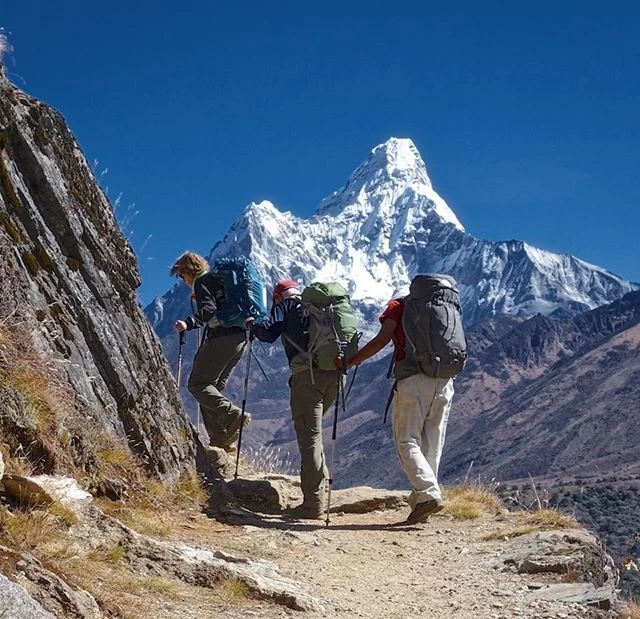
From the flight into Lukla — already a thrilling mountain airstrip — to the prayer flags of Tengboche Monastery fluttering in the wind with Ama Dablam rising behind them, to the moment your helicopter crests the moraine and Everest Base Camp appears below you in all its raw glory, this is a trek that delivers wonder at every turn.
"The Himalayas are not just mountains. They are a feeling — ancient, humbling, and utterly alive. Come and feel it for yourself."
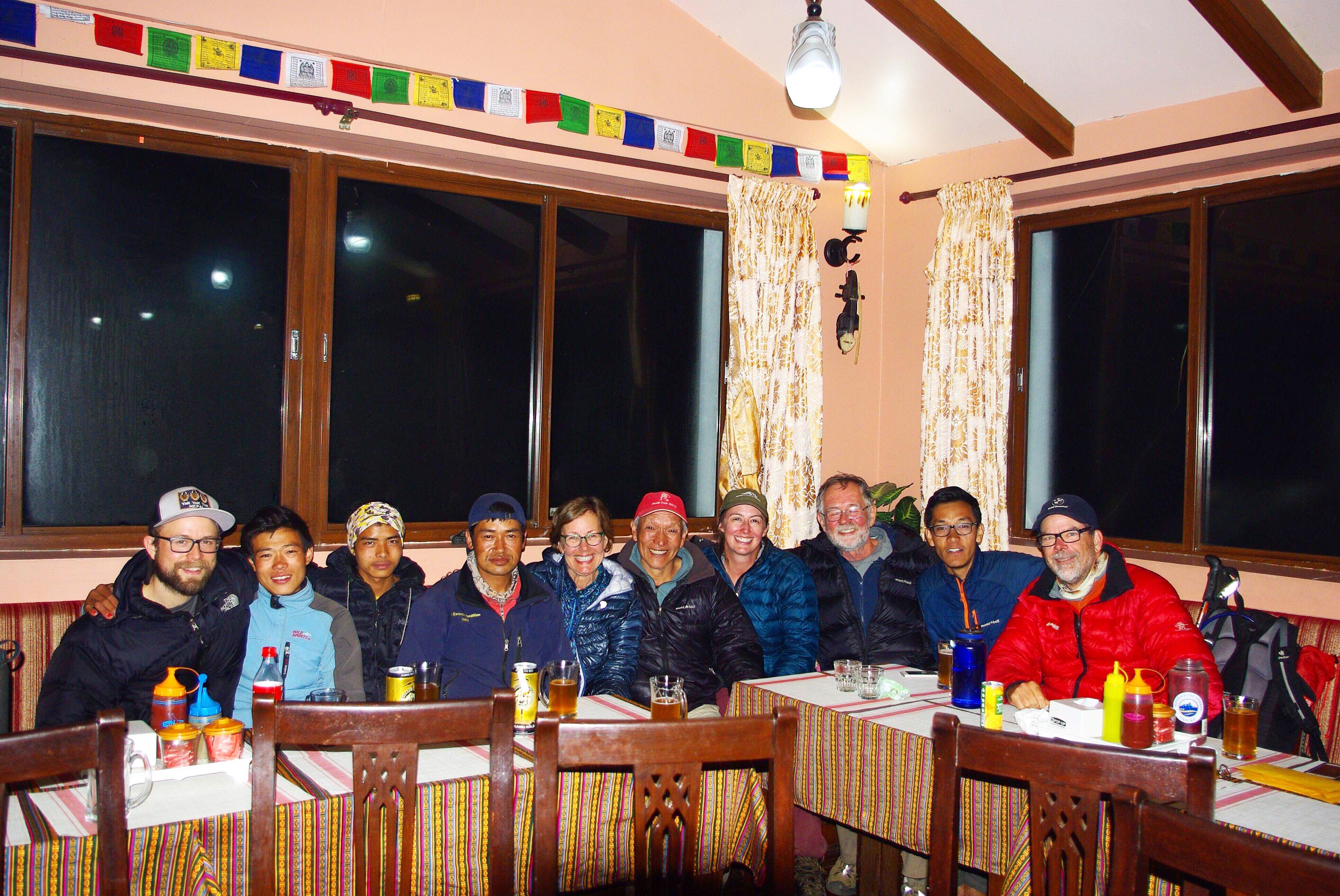
Comfort mountain lodges at every stage of the trek mean you return each evening to warm beds, hot meals, and welcoming hospitality — the best of the Trans-Himalayan Range's Khumbu lodges, carefully selected for quality and location.
This is not a roughing-it expedition. Every night on the Everest Comfort Trek, you rest in accommodation carefully chosen for warmth, cleanliness, and that vital sense of refuge after a day among the peaks.
At Adventure Sherpa Tracks, we believe the majesty of Everest belongs to everyone — not just elite mountaineers or big-budget travellers. Our Everest Comfort Trek was built from the ground up to be genuine, affordable, and deeply human. We are a Nepali-owned company, led by Sherpa guides whose families have called the Himalayas home for generations. When you trek with us, you're not just a client — you're a guest in our homeland.
Whether you're a solo adventurer on a shoestring, a family creating memories to last a lifetime, or a couple seeking total luxury, we have built a package with you in mind. The Everest Himalaya belongs to everyone, and we are proud to welcome trekkers from every corner of the globe.
Our happy-to-help guarantee: Not sure which package fits you? We are happy to help you choose the right option — no pressure, no sales pitch. We will always be honest about what suits your budget, fitness level, and travel style. If something doesn't work for you, we will find a way to make it work.
Lukla Flight Advisory: Mountain flights to Lukla operate under Visual Flight Rules and are weather-dependent. In the event of cancellations, helicopter alternatives may be arranged (at an additional cost of $300–$500+). Depending on availability and group size. This is after crediting your original plane fare. It is strongly advised to build contingency days into your Kathmandu stay post-trek.
We are happy to help — wherever you are from
Trip Highlight
DAY
1
DAY
2
DAY
3
Scenic mountain flight to Lukla (2,860 m), then a gentle trail descent along the Dudh Koshi River to Phakding.
DAY
4
Trek through pine forests and cross the famous Hillary Suspension Bridge into the Sherpa capital, Namche Bazaar (3,440 m).
DAY
5
Trek through pine forests and cross the famous Hillary Suspension Bridge into the Sherpa capital, Namche Bazaar (3,440 m).
DAY
6
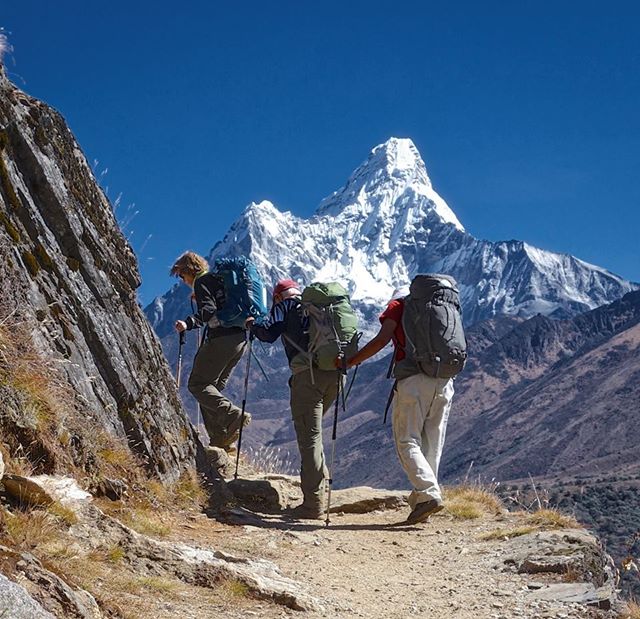
Traverse through rhododendron and juniper forests to Tengboche (3,867 m), home to the most sacred monastery in the Khumbu and unrivalled views of Ama Dablam
DAY
7
Continue upward through Pangboche into the wide, wind-sculpted valley of Dingboche (4,410 m) — a frontier landscape beneath towering peaks.
DAY
8
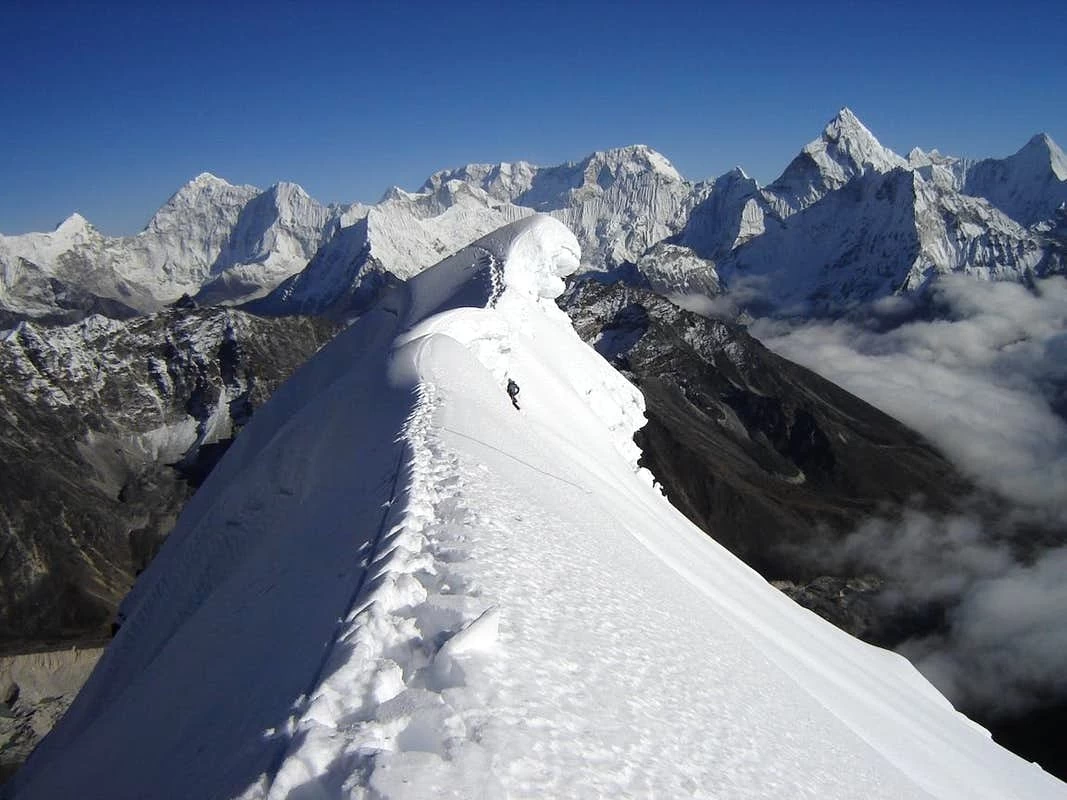
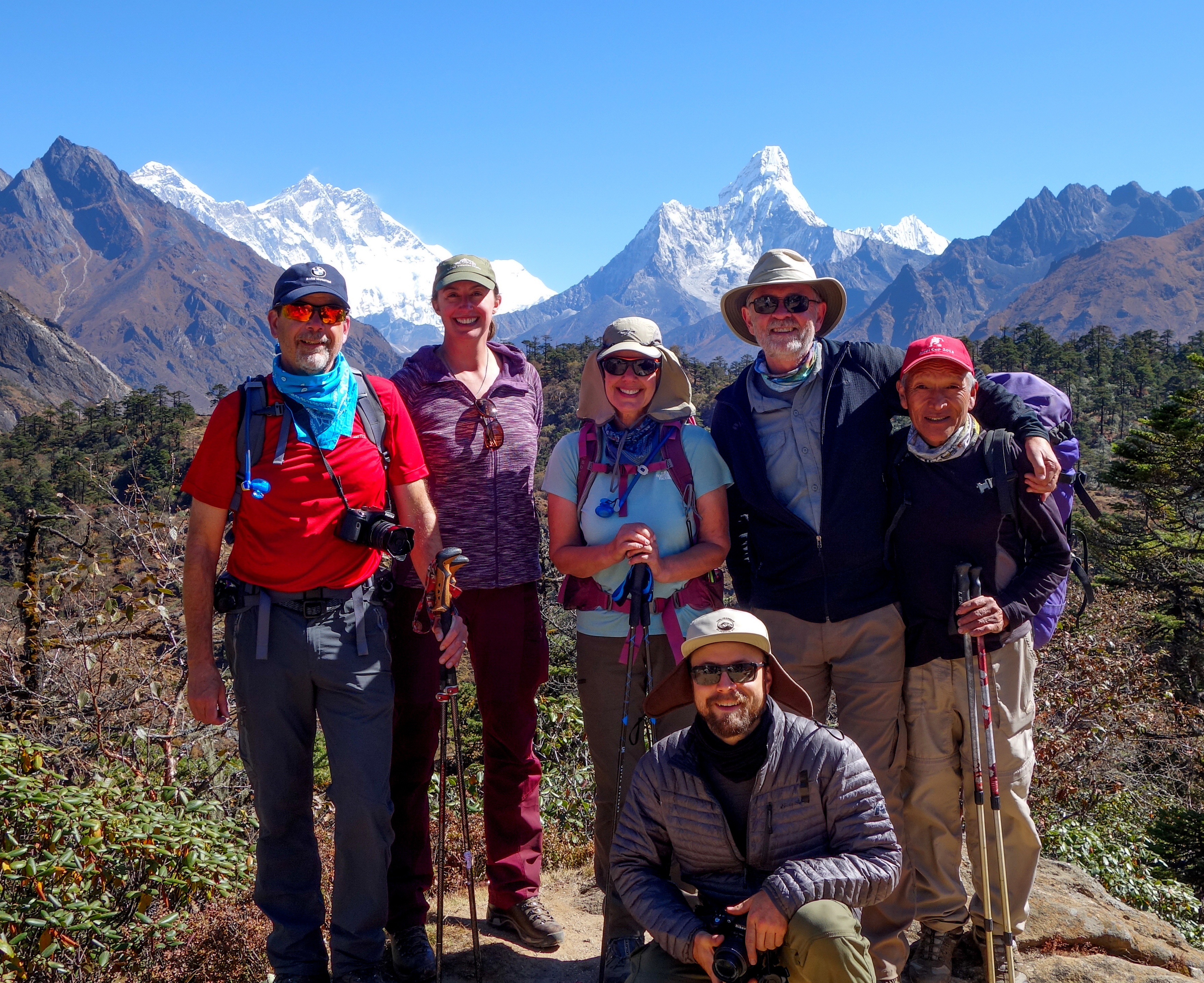
Acclimatization hike to Nangkartshang Peak (5,083 m) — an essential altitude push before the higher camps. The trail climbs steeply northeast from Dingboche up a broad ridge for roughly 2.5 hours. At the summit, you are rewarded with an unobstructed 360° panorama: Makalu (8,485 m) to the east, Ama Dablam's sweeping southeast ridge directly in front, Island Peak (Imja Tse, 6,189 m) to the northeast, and the Lhotse-Everest massif towering to the northwest. Return to Dingboche for the night
DAY
9
The centrepiece of the trip — a thrilling helicopter flight to the Kala Patthar region (approx. 5,200–5,300 m) for breathtaking panoramic views of Everest and the surrounding Himalayan giants, before returning to Lukla."
DAY
10
Early morning flight back to Kathmandu. The views from the Twin Otter on a clear day — Everest, Cho Oyu, and the entire Khumbu massif — are a final spectacular reward. Transfer to your hotel
DAY
11
For international travelers, we recommend keeping at least one reserved day in Kathmandu after a trek or mountain trip, as domestic flights and road travel in Nepal can sometimes be delayed.
DAY
11
Transfer to Tribhuvan International Airport for your international departure. Allow ample time — TIA traffic is heavy, and check-in queues can be long.
Trip Start: 2026-10-10
Trip End: 2026-10-21
spots available
Trip Start: 2026-04-14
Trip End: 2026-04-24
spots available
The main emphasis while trekking is on keeping warm and dry while still being lightweight. You should bring a rucksack or backpack for the gear required during the day. Your pack should contain items such as warm clothes, a jacket, a camera, water bottles, a personal first aid kit, and snacks. The weight limit is 5kg. A porter will carry the rest of your personal equipment packed in a duffel or kit bag. The weight limit for your duffel bag is 15 kg however it is different in the case of peak climbing and expedition.
A Note on Packing
For your international flights, we recommend that you pack all your equipment in your two duffle bags or suitcase. Do not simply pack your backpack (since the straps can be damaged by the baggage handling machines). It is important to lock these bags for their trip. Depending on the airport, you may be able to put your travel locks on after TSA has searched the bags. If not, Lock the bags with Zip Ties. If the TSA cuts off the zip-tie to search your bag, they will replace it. You will still need the travel locks to lock your bags in the hotel and during the trek. Generally, you will take one duffel on the trek , and leave one in the hotel in Kathmandu with your belongings for your time in the city. Your trek in duffel will only be accessible in the evenings (with items such as changes of clothing, sleeping bag), and your day pack will hold vitals such as water, layering, blister kit, and camera.
Headwear
Handwear
Bodywear
Footwear
Other equipments
Washing Kit & Toiletries
Optional items
Conclusion:
As the weather condition is unpredictable in the Himalayan region, you need to be prepared at all times. A day can start sunny with clear skies and later become cold and windy at the high altitudes.
Sometimes, it can rain and snow during the trekking period. You need to remember that for a successful trekking journey, your physical comfort must be the first priority.
Note:
Please note that these items listed above will vary according to the season, trek duration. Please remember that your luggage will be carried by the porter, but you need to carry a daypack on your own. We also suggest you pack only necessary items to keep the weight of your equipment to a minimum.
1
In general, the trek is mostly moderate and slightly difficult at some places. Trekking to Namche Bazaar from Lukla itself is a challenging walk as the trail is very steep and sloppy. The farthest point on the trek is Tengboche at 3,870m (12,697ft.). You will take an acclimatization hike up to Everest View Hotel which is situated at 3,962m (13,000ft.) while you are in Namche Bazaar. This is in fact, the highest point on the trek. If you are physically fit and mentally strong with a strong determination, then this trek is not as difficult as one can reckon. The only factor that attributes to the difficulty of this trek is the altitude and the long walking hours on uneven terrains for several days.
2
In general, the trek is mostly moderate and slightly difficult at some places. Trekking to Namche Bazaar from Lukla itself is a challenging walk as the trail is very steep and sloppy. The farthest point on the trek is Tengboche at 3,870m (12,697ft.). You will take an acclimatization hike up to Everest View Hotel which is situated at 3,962m (13,000ft.) while you are in Namche Bazaar. This is in fact, the highest point on the trek. If you are physically fit and mentally strong with a strong determination, then this trek is not as difficult as one can reckon. The only factor that attributes to the difficulty of this trek is the altitude and the long walking hours on uneven terrains for several days.