Trip Grade
Strenuous

Duration
15 Days

Daily Activity
4-7 hours

Country
Nepal

Season
spring /Autonm

Group Size
2-12 pax

Max Altitude
5545m

Transportation
Helicopter/private vehicle

ACCOMMODATION
Local Lodges

Trip Type
Trekking
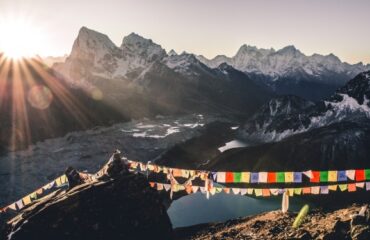
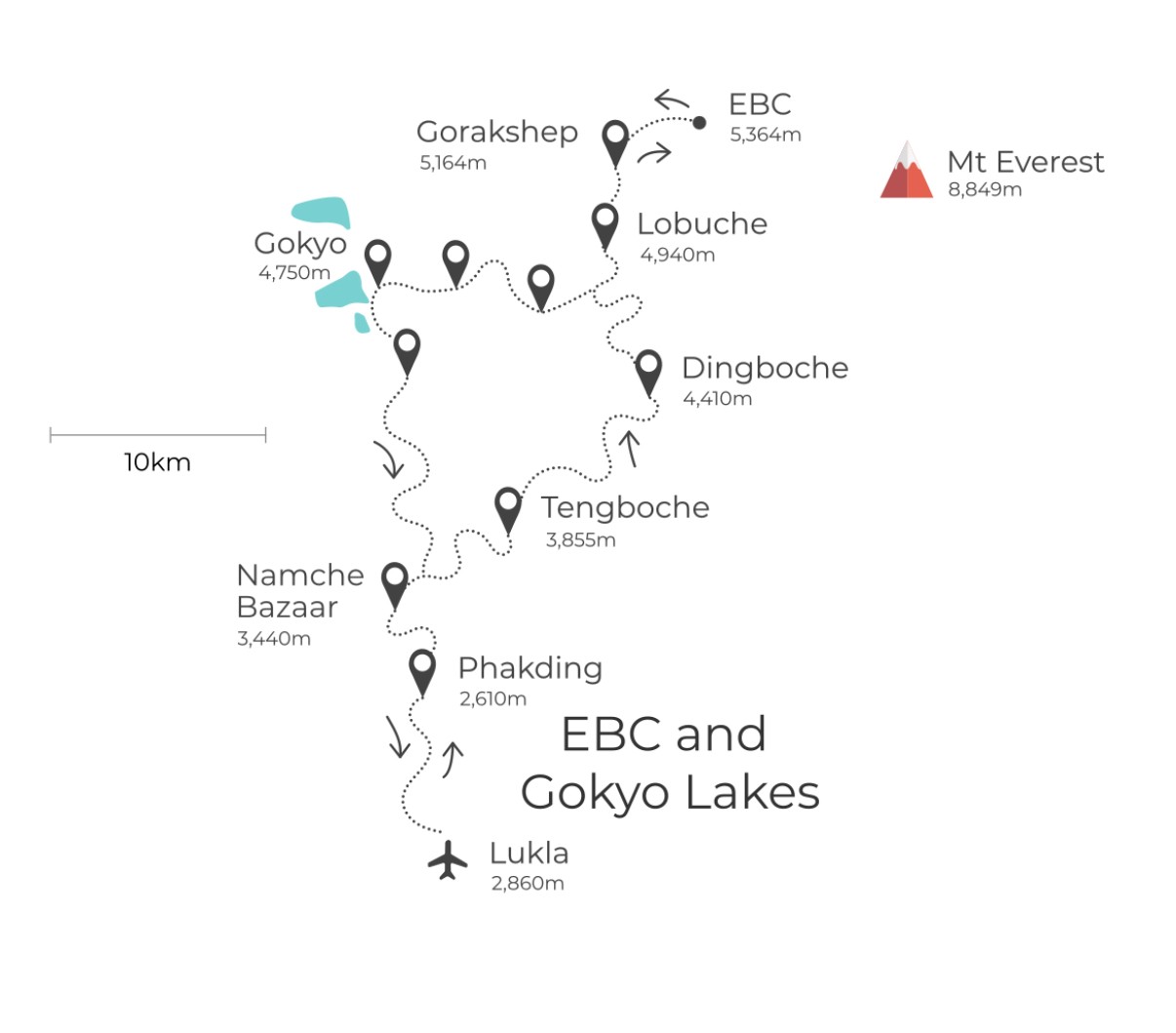
The ultimate circular Khumbu journey — connecting two legendary valleys, crossing a glaciated high pass, and standing at the foot of the world's highest mountain. Two iconic destinations. One extraordinary adventure.
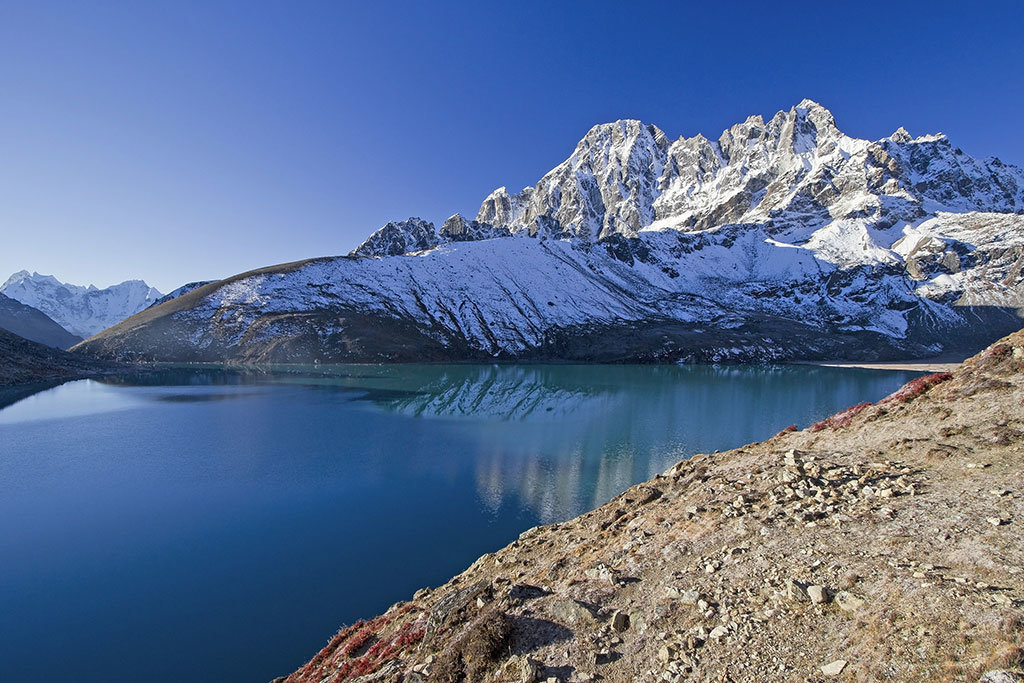
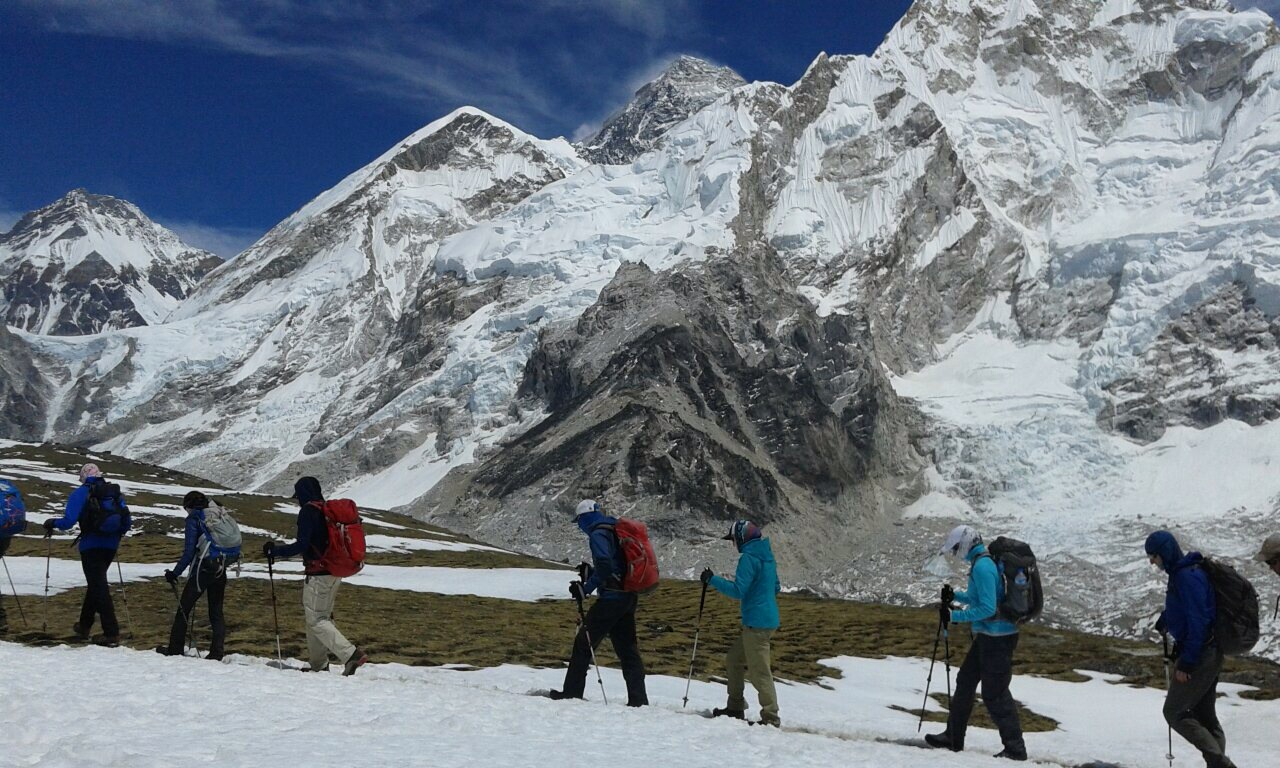
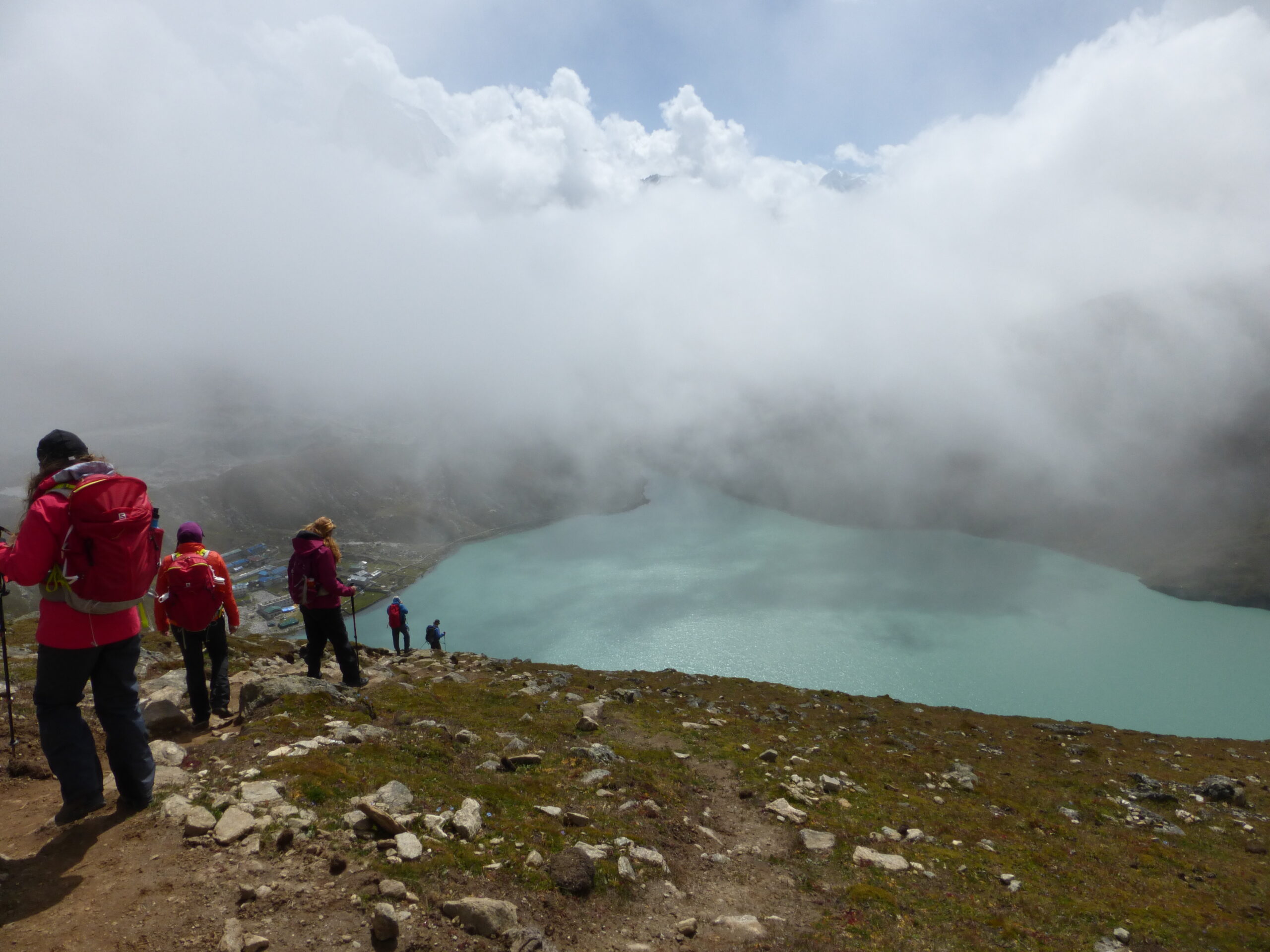
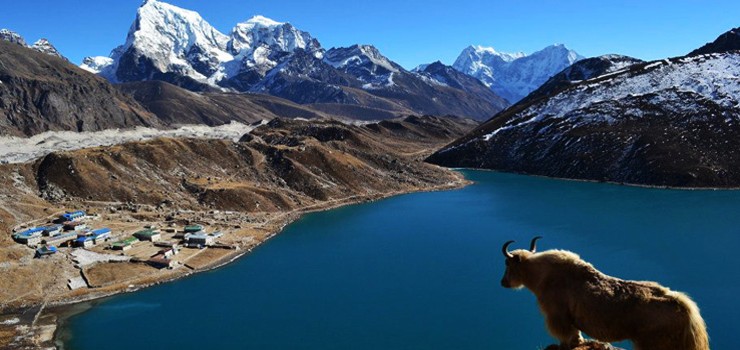
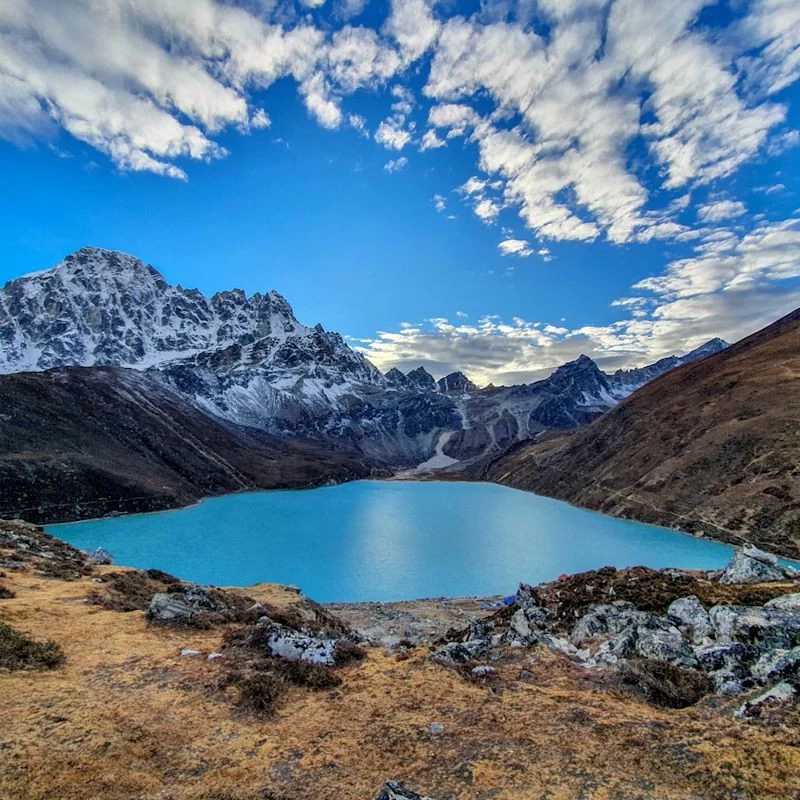
The Gokyo Lakes & Everest Base Camp Trek is the definitive circular Khumbu expedition — a rare journey that weaves through the quieter, pristine Gokyo Valley, crosses the formidable Cho La Pass cloaked in glacial ice, and joins the legendary trail to Everest Base Camp. This is not simply an EBC trek with an added detour. It is a complete, immersive circuit through the heart of Sherpa culture, glacial wilderness, and Himalayan grandeur — one that offers two of Nepal's most breathtaking viewpoints, the turquoise Gokyo Lakes, the world's longest glacial system, and the iconic Base Camp used by every great Everest expedition. All at once. A once-in-a-lifetime experience packed into a single unforgettable loop.
You may notice our trek price sits a little above what some local operators advertise. This is intentional and transparent. Our package includes a proportional share of helicopter transport to and from Lukla — pre-arranged and built directly into your trek cost, so there are no surprise bills if the mountains demand an evacuation.
Our promise: We would rather be upfront about what is included than surprise you with an emergency bill at 5,000 metres. The small price difference buys you something genuinely valuable — the ability to focus entirely on your adventure.
Trip Highlight
DAY
1
DAY
2
DAY
3
DAY
4
DAY
5
DAY
6
DAY
7
DAY
8
DAY
9
DAY
10
DAY
11
DAY
12
DAY
13
DAY
14
DAY
15
DAY
16
DAY
17
DAY
18
DAY
19
The main emphasis while trekking is on keeping warm and dry while still being lightweight. You should bring a rucksack or backpack for the gear required during the day. Your pack should contain items such as warm clothes, a jacket, a camera, water bottles, a personal first aid kit, and snacks. The weight limit is 5kg. A porter will carry the rest of your personal equipment packed in a duffel or kit bag. The weight limit for your duffel bag is 15 kg however it is different in the case of peak climbing and expedition.
A Note on Packing
For your international flights, we recommend that you pack all your equipment in your two duffle bags or suitcase. Do not simply pack your backpack (since the straps can be damaged by the baggage handling machines). It is important to lock these bags for their trip. Depending on the airport, you may be able to put your travel locks on after TSA has searched the bags. If not, Lock the bags with Zip Ties. If the TSA cuts off the zip-tie to search your bag, they will replace it. You will still need the travel locks to lock your bags in the hotel and during the trek. Generally, you will take one duffel on the trek , and leave one in the hotel in Kathmandu with your belongings for your time in the city. Your trek in duffel will only be accessible in the evenings (with items such as changes of clothing, sleeping bag), and your day pack will hold vitals such as water, layering, blister kit, and camera.
FOOTWEAR
Conclusion:
As the weather condition is unpredictable in the Himalayan region, you need to be prepared at all times. A day can start sunny with clear skies and later become cold and windy at the high altitudes.
Sometimes, it can rain and snow during the trekking period. You need to remember that for a successful trekking journey, your physical comfort must be the first priority.
Note:
Please note that these items listed above will vary according to the season, trek duration. Please remember that your luggage will be carried by the porter, but you need to carry a daypack on your own. We also suggest you pack only necessary items to keep the weight of your equipment to a minimum.
1
Comparatively Everest Base Camp trek via Gokyo Lakes and Cho La Pass is harder than the EBC classical route. One must read and acquire important information, consult and prepare better with a strong mind set to take up the challenge. This trek is more technically advanced than some of the other treks in the Everest region – thus it is more adventurous. With little technical skills and a good physical fitness and acclimatization, you’ll have nothing to worry about on the trek. Sometimes trekkers simply tend to get overwhelmed by hearing from others about the difficulties and various challenges of this trek. Our expert travel consultants will guide you for better counseling and preparation to take up this challenge.
2
Everest Base Camp trek via Gokyo lakes and Cho La Pass is best done in pre-monsoon season i.e. from March to May and post-monsoon season i.e. from late September to December. It is also possible to do this trek in February and early September but the trek is best preferred during the above months.
3